 EN
ENCOSMETIC VEIN CARE FOR THE HANDS



WHY HAND VEINS BECOME VISIBLE
As skin becomes thinner and loses elasticity, blue or green veins beneath the skin may show more clearly.
Reduced fat, collagen, and soft tissue can leave veins closer to the surface of the hands.
Some people naturally have larger surface veins, thinner skin, or less padding on the back of the hands.
Warm temperatures, exercise, and frequent hand use can temporarily increase blood flow and make veins more noticeable.
COSMETIC CONCERN OR MEDICAL CHANGE?
Stable, painless visible hand veins are often a cosmetic concern. A vein specialist should still evaluate the pattern before treatment because the hands contain important veins, arteries, nerves, and tendons in a compact area.
Arrange a medical evaluation when a vein changes suddenly or appears with pain, swelling, warmth, redness, tenderness, or a change in the skin.
Pain that begins suddenly, becomes persistent, or limits normal hand use deserves evaluation.
A rapid change in the hand or surrounding skin may indicate more than a cosmetic concern.
Heat and significant tenderness around a vein should be assessed before cosmetic treatment.
A newly firm or hardened vein can require a medical examination and a different care plan.
Changes in color, temperature, sensation, or circulation should not be treated as routine vein visibility.
VEIN PATTERNS
Hand veins vary in size, depth, color, and shape. The best treatment depends on the specific vessel rather than a one-size-fits-all approach.
Reticular veins may appear as visible lines across the back of the hands without standing far above the skin.
Larger surface veins may protrude more clearly, especially when the hands are lowered, warm, or active.
Small branching red, blue, or purple vessels may appear around the fingers or back of the hands.
Symptoms or sudden changes require medical evaluation before cosmetic treatment is discussed.
PERSONALIZED TREATMENT OPTIONS
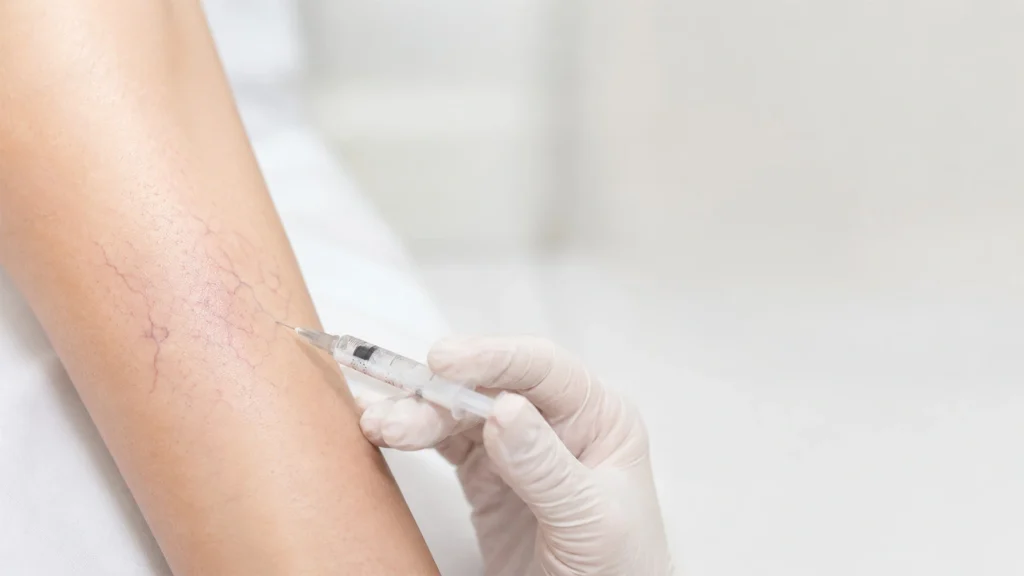
Sclerotherapy uses a fine needle to inject a physician-selected solution called a sclerosant into the targeted vein. The solution creates a controlled reaction in the vein lining, allowing the treated vein to close.
Blood flow redirects through functioning veins, and the closed vessel gradually becomes less visible as the body processes it. The medication, concentration, and liquid or foam form depend on the vein being treated.
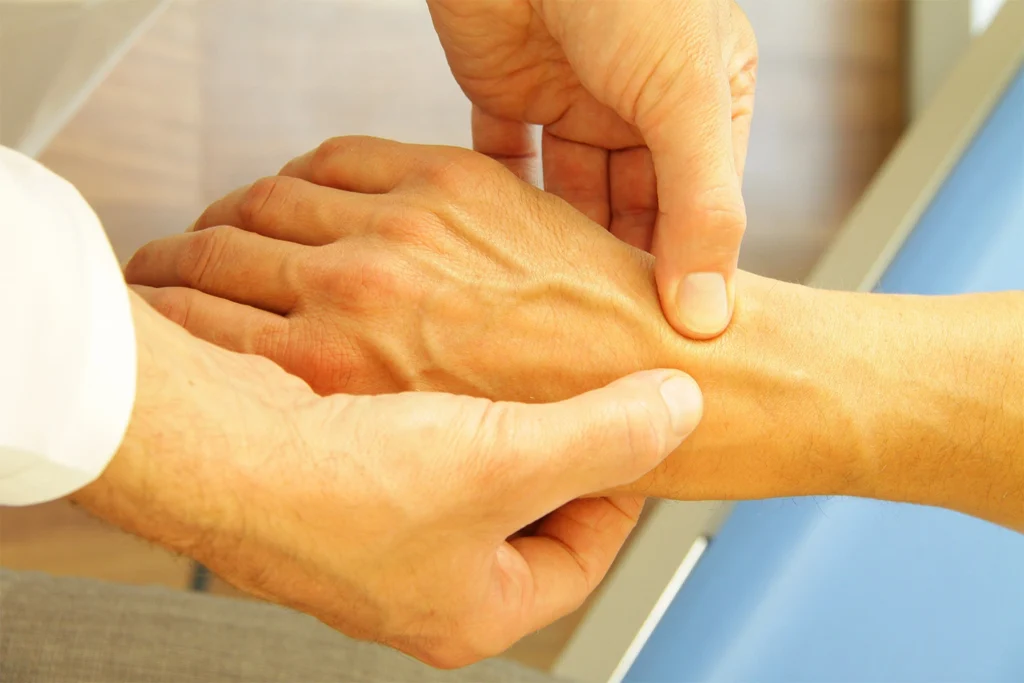
For selected larger, raised, or bulging veins, microphlebectomy may be considered. After local anesthesia, the physician removes small segments of the vein through tiny skin openings that generally do not require stitches.
This approach is more direct than injection treatment and may be appropriate when the size, shape, or position of a vein makes removal a better option.
MATCHING THE TREATMENT TO THE VEIN
Smaller surface veins and larger raised veins may require different approaches.
Flat, branching, or bulging veins respond differently to injection or removal.
Pain, swelling, or sudden changes may require additional assessment.
Medications, allergies, pregnancy, mobility, and prior blood clots are reviewed.
The consultation defines which veins can be treated and what improvement may look like.
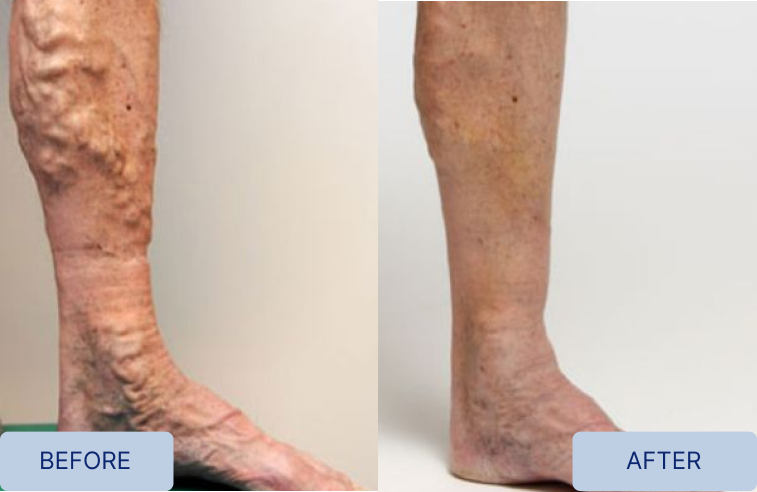
BEFORE, DURING & AFTER TREATMENT
– Dave
Before, during & after treatment
Your experience will depend on the size and type of visible veins and whether Dr. Kowalski recommends sclerotherapy or microphlebectomy. The care team will explain how to prepare, what may happen during treatment, and the aftercare that applies to your plan.
The care team reviews your concerns, medical history, and recommended procedure before treatment begins.
The hand is cleaned and prepared. Local anesthesia may be used when appropriate for the selected procedure.
Dr. Kowalski performs the recommended treatment based on the size, position, and appearance of the targeted veins.
The treated area may be wrapped or compressed, and you receive written aftercare guidance before leaving.
Many patients return to light daily activities relatively quickly, while specific restrictions depend on the procedure.
Improvement develops over time as treated veins fade or the area heals. Follow-up may be recommended to review progress.
COMFORT, RECOVERY & RESULTS
1
Ultrasound identifies reflux, the affected vein, and the treatment path.
2
Temporary bruising, swelling, tenderness, firmness, or discoloration may occur while the area begins to heal.
3
The treated vein may gradually fade or soften. Compression gloves or wraps and activity limits may be recommended.
4
Follow-up may be recommended to review progress. Treated veins may remain closed, but new veins can develop over time.
SAFETY, RISKS & REALISTIC EXPECTATIONS
Bruising, redness, swelling, firmness, pigmentation changes, or small new surface vessels may occur. Less common complications can include skin injury, allergic reaction, inflammation, or a blood clot.
Bruising, bleeding, temporary numbness, infection, scarring, or changes in skin sensation may occur.
Treatment does not restore lost hand volume, remove age spots, prevent skin aging, or stop new visible veins from developing later.
PHYSICIAN-LED CARE
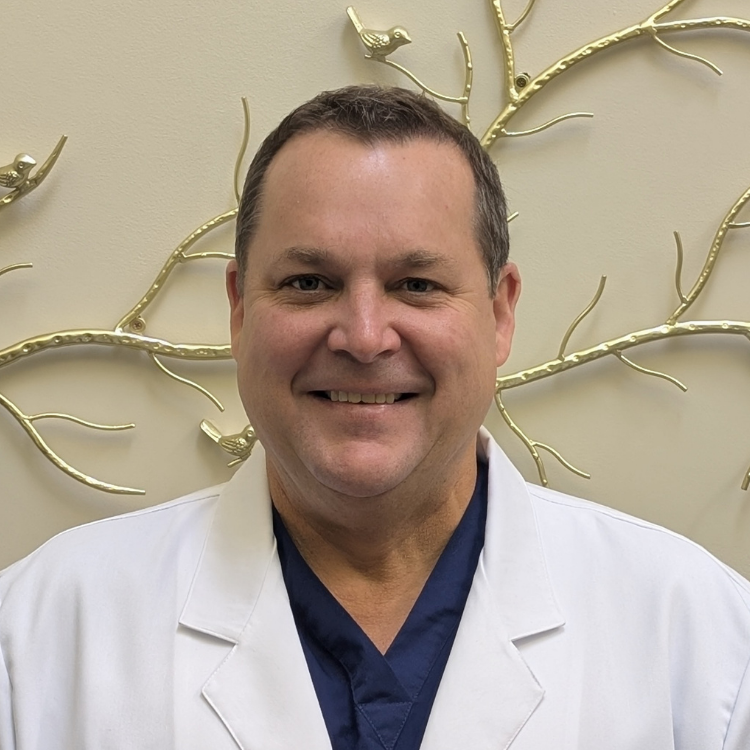
Dr. Christopher Kowalski combines extensive surgical training with a personalized approach to vein care. He earned his medical degree at Temple University School of Medicine, completed his general surgery residency at The Washington Hospital Center, and pursued fellowship training in advanced laparoscopic and bariatric surgery at St. Peter’s University Hospital.
For hand vein treatment, his role is to determine whether the concern is cosmetic, whether symptoms require further evaluation, and which treatment option offers an appropriate balance of safety and visible improvement.
COST & COVERAGE
Hand vein treatment is commonly performed to improve appearance and is usually self-pay. The total cost depends on the veins being treated, the procedure Dr. Kowalski recommends, and whether more than one treatment session is needed.
After evaluating your hands, the clinic can explain the recommended treatment plan and expected costs before you decide to proceed.
Treating several prominent veins may require a different plan than treating one isolated vein.
Pricing may vary depending on whether sclerotherapy or microphlebectomy is recommended.
Some patients may need more than one session to address their visible veins.
Compression guidance, follow-up visits, and other care needs depend on the procedure performed.
VISIT THE CLINIC
COMMON QUESTIONS
READY TO DISCUSS YOUR OPTIONS?